Where the idea came from
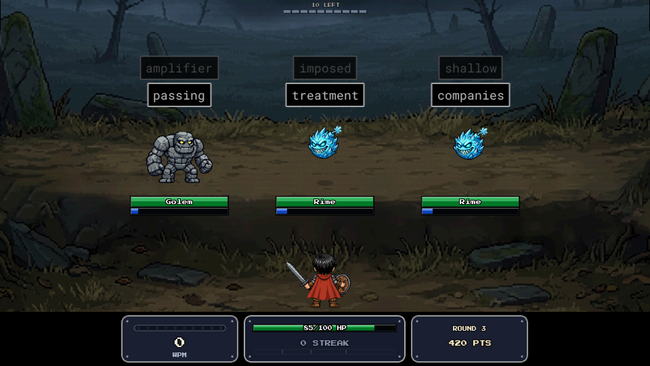
The idea didn’t come from typing. It came from a memory that surfaced out of nowhere one night, of an old Squaresoft game I used to play as a kid. Not a mainline Final Fantasy. One of the lesser-known ones. I’m not going to name it; if you played it you already know which one I mean, and if you didn’t, that’s fine. Bright primary-color palette, slightly squishy sprites, early-’90s. I hadn’t touched it in years. It just came back.
What I remembered most clearly was the battle screen. Your hero and a rotating guest character stood at the bottom of the screen, drawn small. Two or three enemies lined up across the top, drawn big. A little menu that slid in when it was your turn and gave you four options. You picked. You waited. The enemy did something. You picked again. It was turn-based and calm, almost meditative, in the way those games could be.
I kept circling back to the perspective. The way the big enemies loomed over the small heroes at the bottom. Something about it just looked right for a typing game, even though the actual game I was remembering had nothing to do with typing. I started picturing the same screen except the commands weren’t a menu, they were words you had to type.
I remember thinking, in that way you do when an old game surfaces and you start idly redesigning it in your head, what if you kept this layout and stripped out the waiting. The whole reason the game lets you think for a minute is because you only have four commands and you have to pick the right one. If your “command” was a word, there’s no pick. You just go.
I didn’t do anything about it for a couple of weeks. The idea just sat there.
#Why it stuck
My daughter brought it back up. She’s too young right now to care about any of this, barely old enough to mash a keyboard without trying to eat it. But she will be eventually. Typing lessons never worked on me. I bounced off the structured programs, the drill-and-repeat kind. What taught me to type was playing MUDs. Text-based dungeons where you spent hours typing commands, talking to other players, describing what your character did. I got fast because I wanted to keep up with what was happening on screen, not because a timer told me my WPM.
So what I want for my daughter is a game she can fall into, come out the other side faster at the keyboard, and not really notice that’s what happened. Same way it happened to me. The JRPG screen layout, the big enemies, the beat-to-beat rhythm of a fight, all of that seemed like it could do that job for a kid who’d never heard of a MUD.
This started as a thing I was making for fun, not for anyone in particular. I wasn’t thinking about players. It was just a side project, something I picked at in the evenings, and I half-expected it to end up sitting unfinished on my hard drive. My daughter was the only person I had in mind from day one, and even that was more of a loose “maybe she’ll pick it up in a few years” than a design target. But when I’m making a choice about font sizes or word lengths or how forgiving the early rounds should be, she’s still the one I picture: a kid who doesn’t yet know where the J key is.
#The pitch, in one sentence
If I had to say the whole game in one sentence, which I’ve now had to do a bunch of times:
Three monsters. Each one carries a word. You type the word to hit it. If you’re slow or sloppy, the monsters hit you first.
That’s the regular round in Keeb Quest. Everything I’ve built since has been figuring out what that sentence means once you try to play it. The next post is about the first time I tried.