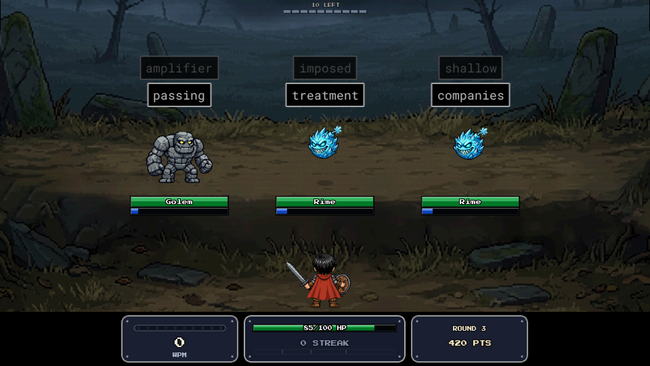
Where the idea came from
A memory of a lesser-known Squaresoft game that came back out of nowhere, a tight vertical JRPG battle layout that looked more like a standoff than a chessboard, and a daughter who's going to need to learn to type someday.
Jan 12, 2026 · 3 min read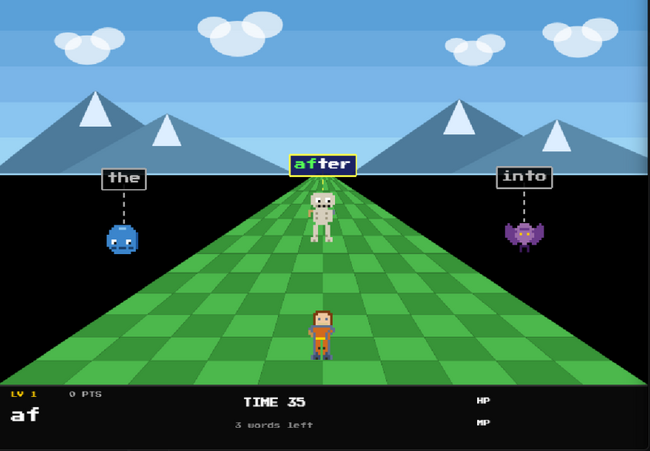
The first build
One afternoon, three placeholder enemies, a rough prototype. What I noticed playing it and why the enemies needed ATB gauges.
Jan 26, 2026 · 3 min read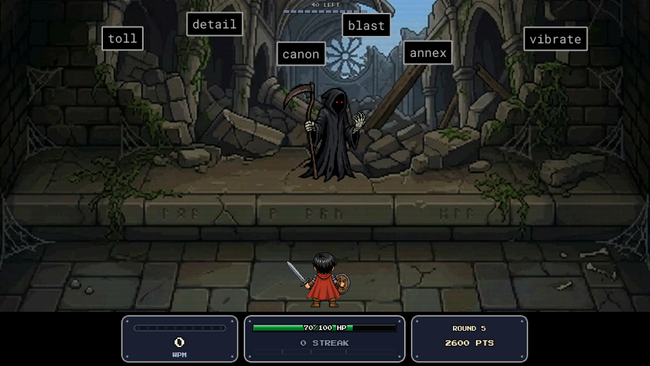
Two bosses that came from other games
Falling words came from an old DOS missile game. Word grid came from raid healing in an MMO and, separately, from a spreadsheet I had open at the time.
Feb 16, 2026 · 3 min read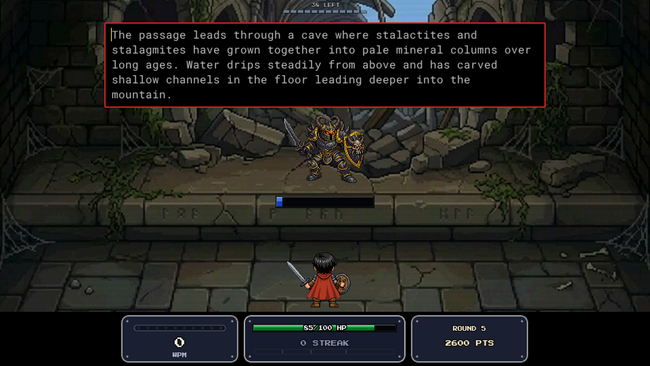
Two bosses that came from typing tests
Paragraph boss and line rush both come straight from the typing-test sites I'd been using for years. One is about rhythm, the other is about flow.
Feb 27, 2026 · 2 min read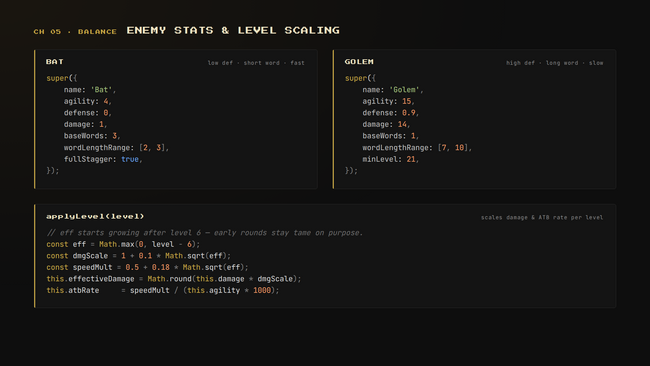
Balancing a run
I started with no difficulty menu, one tuned curve, and the belief that typing speed would do the work. Playtesting broke that theory. What followed was three modes and a lot of tuning.
Mar 23, 2026 · 3 min read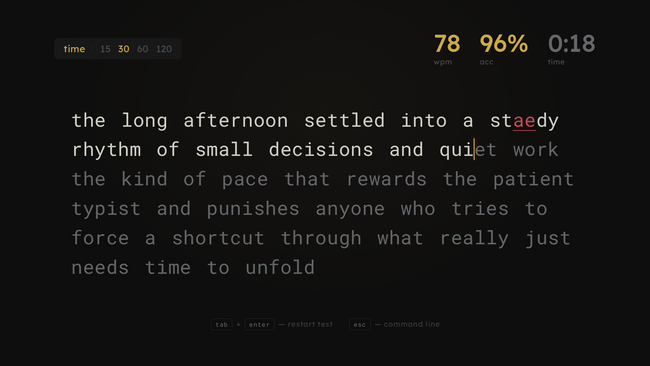
Borrowing UX from typing tests
Cursor styles, caret speeds, word colors, WPM calculations, post-run graphs. The typing UI conventions Keeb Quest adapted, and why.
Apr 14, 2026 · 6 min read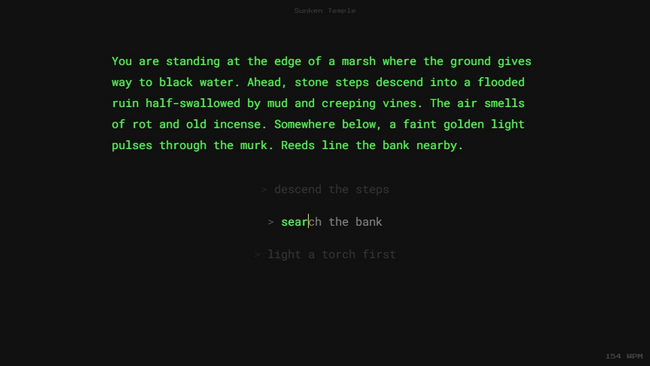
Adventure mode, and why it ended up at ten minutes
Choose Your Own Adventure books, MUDs, and the first-person room description. How typing through a story changes the way you read, and why ten minutes became the right length.
May 1, 2026 · 6 min read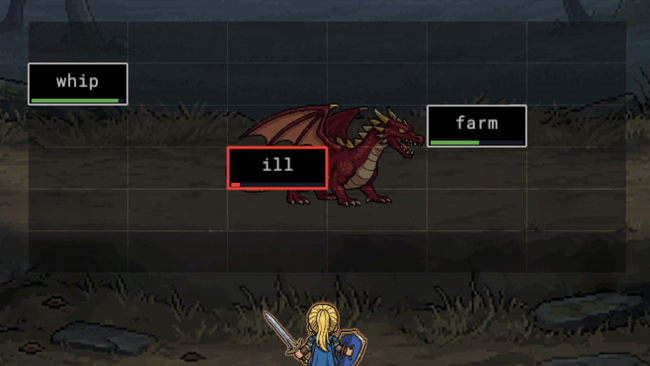
Designing for flow
No artificial pauses, no obscured words, no breaks in the action. The typing never stops, and the decisions happen while your fingers are already moving.
May 22, 2026 · 2 min read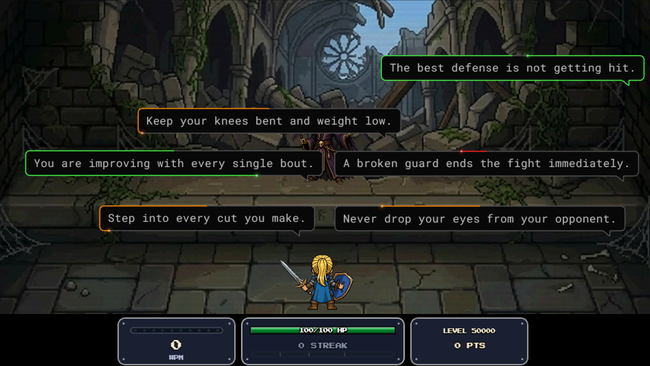
Designing the Dialogue boss
The idea came from comic book speech bubbles. It builds on what paragraph boss already established: punctuation is part of what you type.
Jun 30, 2026 · 1 min read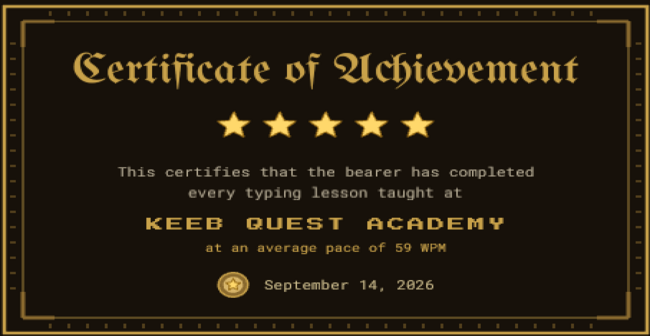
Building Academy Mode
The rest of the game assumes you can already type. Academy is for the player who can't yet, the one I actually built this for in the first place.
Sep 14, 2026 · 4 min read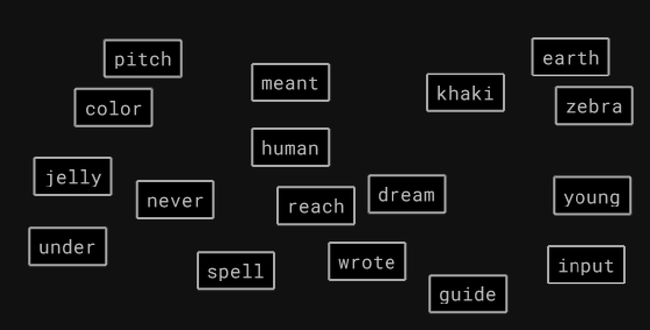
Designing the Scatter boss
Scatter started as Word Sweep, an Academy challenge with twenty-six words on screen, one for every letter. I turned it into a boss the same day and spent the next few days tuning where words appear and how fast they come back.
Oct 1, 2026 · 3 min read